 Lenouar
Introducing the Lenouar AI Appliance
Private AI hardware we install on your premises, preloaded with localized models, permission-aware retrieval and audit logging. Four tiers, one stack.
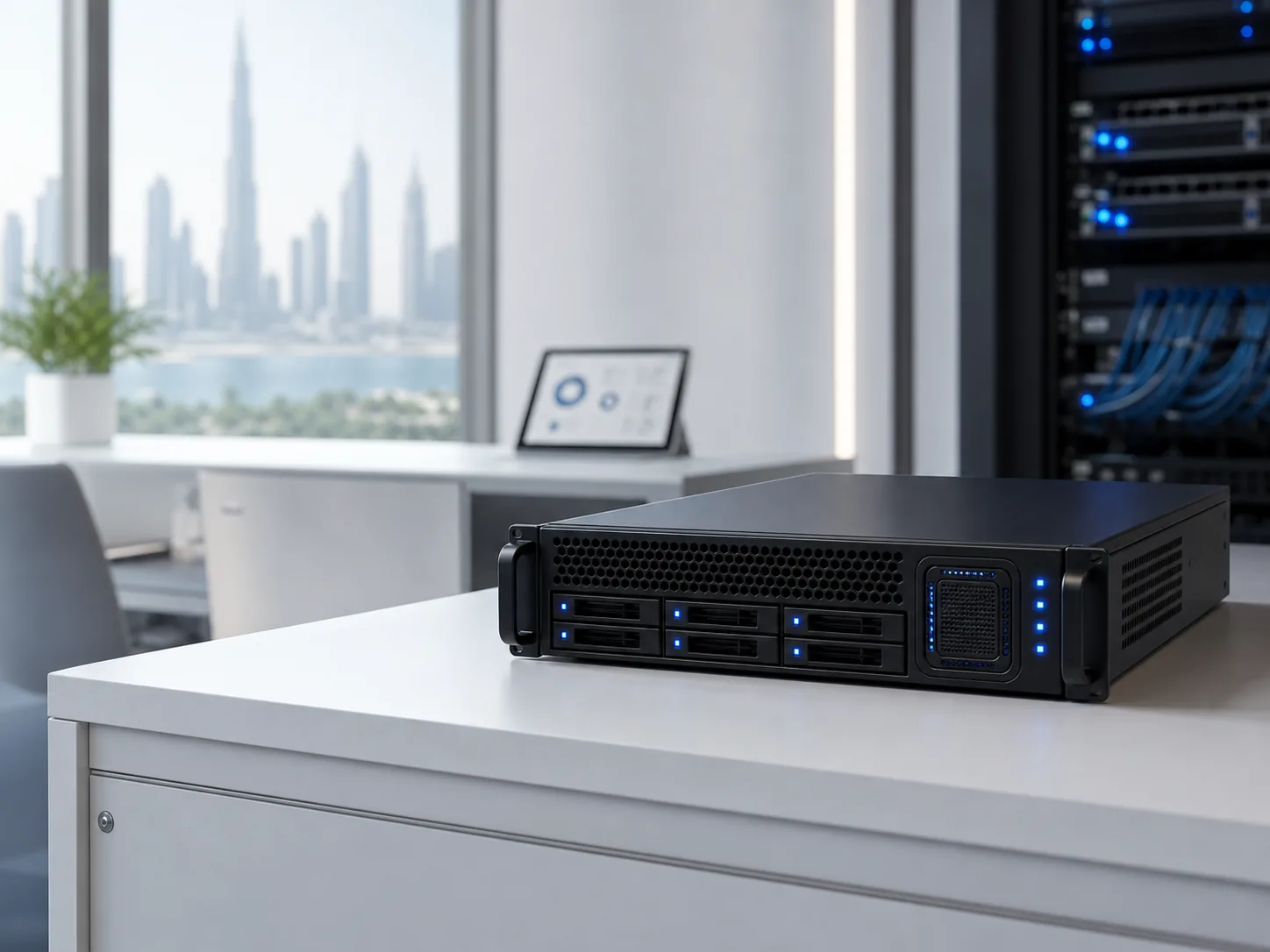
Key takeaways
- The Lenouar AI Appliance is private AI hardware we install inside your facility, preloaded with localized models, private retrieval, tenant isolation and audit logging.
- Four tiers cover the range from a single clinic room to a multi-site organisation: AI Edge, AI Node, AI Rack and AI Cluster.
- The node and rack class runs two data-center GPUs of L40S or A100 class, serves open models up to roughly 70 billion parameters, and delivers around 1,200 tokens per second.
- Hardware comes from vendors your procurement team already approves: NVIDIA, Dell, HPE, Supermicro, Lenovo, ASUS, Intel and AMD among them.
- We install it, monitor it and maintain it. Owning the hardware should not mean inheriting an operations problem.
Mid-market regulated organisations in the UAE consistently need AI that runs inside their own network, but rarely have the platform team to build and operate an inference stack, and an appliance closes that gap.
We kept meeting the same organisation. A hospital, a law firm, a government department. Real document volume, real efficiency pressure, and a hard constraint that the data cannot go to a public endpoint.
The options on offer did not fit. National-scale sovereign cloud programmes are built for a different tier of institution. Public AI tools are easy to start and difficult to govern. Building an in-house stack assumes a platform engineering team that most mid-market organisations do not have and should not need to hire.
So the product is the whole system rather than a component: hardware, model stack, retrieval, governance and the deployment work, delivered as one thing we install and keep running.
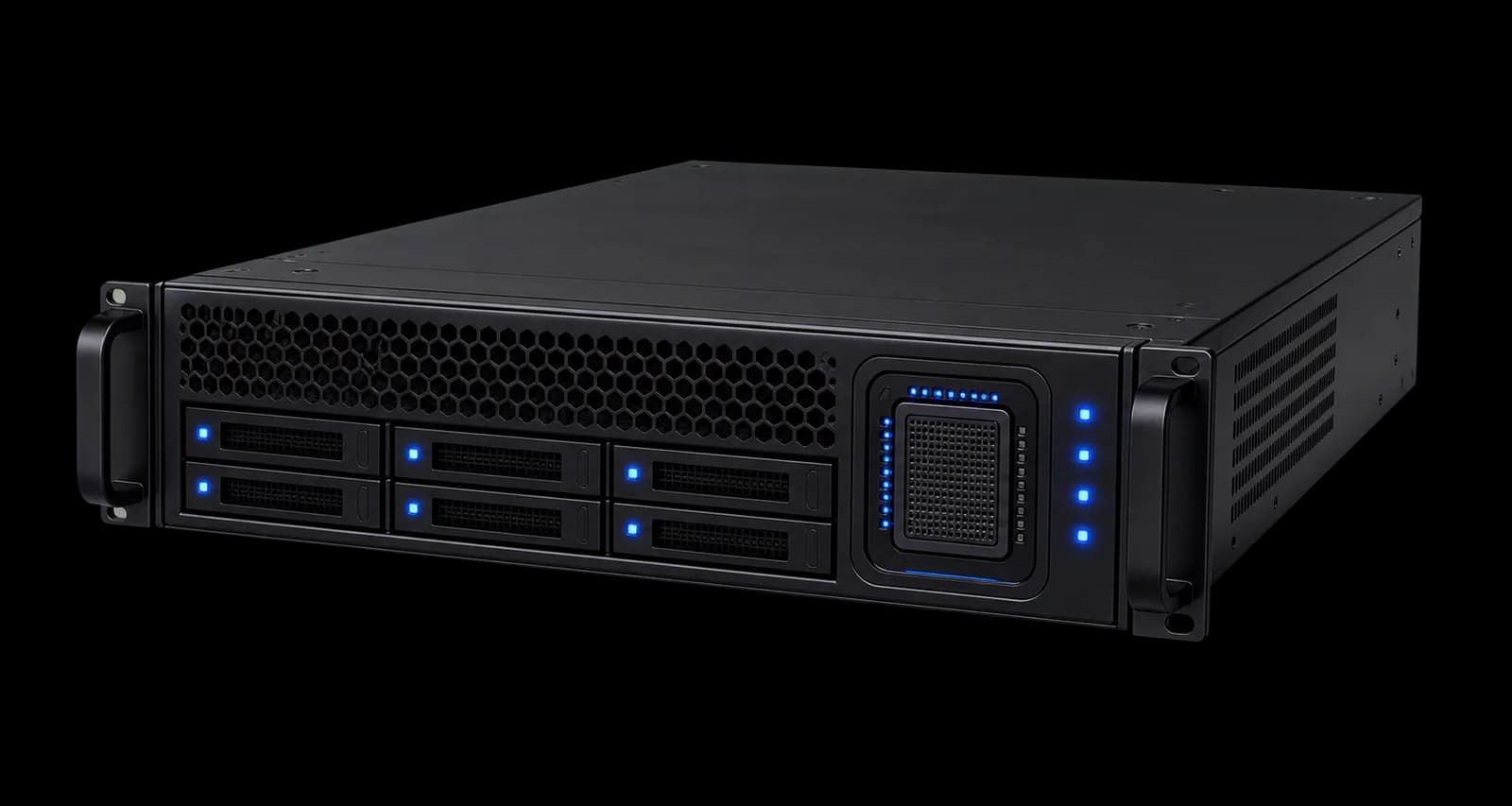
What actually ships
Every appliance arrives preloaded with the same private AI stack: localized model serving, private retrieval over your approved knowledge, tenant isolation and audit logging, ready to connect to your systems.
The hardware is the carrier, not the product. What makes it useful on day one is that the software layer is already configured, tested and identical across tiers.
- Localized model serving, with open-weight models selected for your language mix and workload
- Private retrieval over your approved internal knowledge, with permissions respected at query time
- Tenant isolation, so departments can share hardware without sharing visibility
- Audit logging on every query, tied to an authenticated identity
- Connectors into the systems you already run, including EHR, ERP, document stores and internal APIs
Nothing in that list is optional or sold separately. A private AI system without permission-aware retrieval and audit logging is not a private AI system, it is an inference endpoint with a nicer front end.
Four tiers, one stack
AI Edge fits a single room or branch, AI Node serves a department, AI Rack serves an organisation, and AI Cluster spans departments and sites, all running the same software stack.
Sizing is about footprint and capacity, not capability. A clinic on AI Edge gets the same governance model as a hospital group on AI Cluster.
- AI Edge: ultra-compact, for a single room, clinic or branch office where space and power are constrained
- AI Node: compact desktop-class, for a single department or site
- AI Rack: rackmount GPU server-class, for organisation-wide deployment with room to scale
- AI Cluster: multi-node, for organisation-wide AI across departments and sites
- ~70B
- Open model parameter scale served on the node and rack class
- ~1,200 tok/s
- Throughput on two data-center GPUs of L40S or A100 class
What it does not do
The appliance runs open-weight models, which are excellent at document, retrieval and workflow tasks and still trail the leading proprietary models on the hardest open-ended reasoning.
It is worth being direct about this, because the alternative is a disappointed client six weeks after installation.
For document extraction, classification, summarisation, policy question answering and structured workflow automation, open-weight models are entirely sufficient in production today. That covers the large majority of what regulated organisations actually need.
For genuinely difficult open-ended reasoning, the frontier proprietary models still hold an advantage. If that is your core workload, we will say so during scoping rather than after delivery.
Capacity is also fixed. An appliance sized for steady load will queue under an unusual surge. We size against your real utilisation curve, and we would rather have that conversation before the purchase order.
How deployment works
We scope the workload, install the appliance on your premises, connect it to your internal systems, migrate the knowledge it needs, configure the workflows and validate the audit trail before handover.
Installation is measured in days rather than quarters, because the stack is already built. The work that takes real time is integration and validation, which is where deployments succeed or fail.
After handover we monitor and maintain the appliance. Patching, model upgrades, capacity review and support are ours, not a burden handed to an IT team that did not ask for a GPU cluster.
- Scope: identify the workloads, data classes and language mix, and size the tier against real utilisation
- Install: physical deployment on your premises, on your network
- Connect: integrate with EHR, ERP, document stores and internal APIs
- Configure: set up retrieval scope, permissions, workflows and human checkpoints
- Validate: confirm the audit trail answers the questions an assessor will ask
- Operate: ongoing monitoring, maintenance and model lifecycle management
Frequently asked questions
- What is the Lenouar AI Appliance?
- It is a private AI system delivered as hardware installed inside your own facility, preloaded with localized model serving, private retrieval, tenant isolation and audit logging. Lenouar installs it, connects it to your internal systems, and maintains it over time, so data never leaves your network.
- Which appliance tier do we need?
- AI Edge suits a single room, clinic or branch with tight space and power. AI Node serves a department or single site. AI Rack covers organisation-wide deployment with room to scale. AI Cluster spans multiple departments and sites. All four run the same software stack, so the choice is about footprint and capacity rather than capability.
- What hardware is the appliance built on?
- The appliances are built on data-center hardware from established vendors including NVIDIA, Dell, HPE, Supermicro, Lenovo, ASUS, Gigabyte, Intel, AMD and ASRock. The node and rack class uses two data-center GPUs of L40S or A100 class, serving open models up to roughly 70 billion parameters at around 1,200 tokens per second.
- Do we need our own engineers to run it?
- No. Lenouar installs, monitors and maintains the appliance, including patching, model upgrades and capacity review. That is deliberate, because the organisations that most need private AI are usually the ones without a platform engineering team to run inference infrastructure.
- How long does installation take?
- Physical installation is measured in days, because the stack ships preconfigured. The timeline is driven by integration and validation work: connecting internal systems, setting retrieval scope and permissions, configuring workflows, and confirming the audit trail meets the standards you are assessed against.
Sources
- 1.Lenouar AI AppliancesLenouar
- 2.Lenouar Private AI InfrastructureLenouar
- 3.Federal Decree-Law No. 45 of 2021 on the Protection of Personal DataUAE Legislation
Read more
DIFC Regulation 10: what full enforcement means for your AI systems
Not new law. Introduced in September 2023, enforced from January 2026. The four obligations, who they fall on, and why no vendor can sell you the certificate.
Oct 2, 2026
The UAE's Federal Authority for AI and Data: what actually changes
A Cabinet-level regulator consolidating three bodies. What it covers, what it does not change today, and the artefacts worth building before the rules settle.
Sep 25, 2026
UAE PDPL and AI: what the 2027 deadline actually requires
Everyone quotes 1 January 2027. Far fewer can say what it rests on. How the PDPL applies to AI systems, which articles matter, and what to fix first.
Sep 4, 2026
Bring AI inside your walls.
Talk to us about a private, compliance-ready deployment for your organization.